

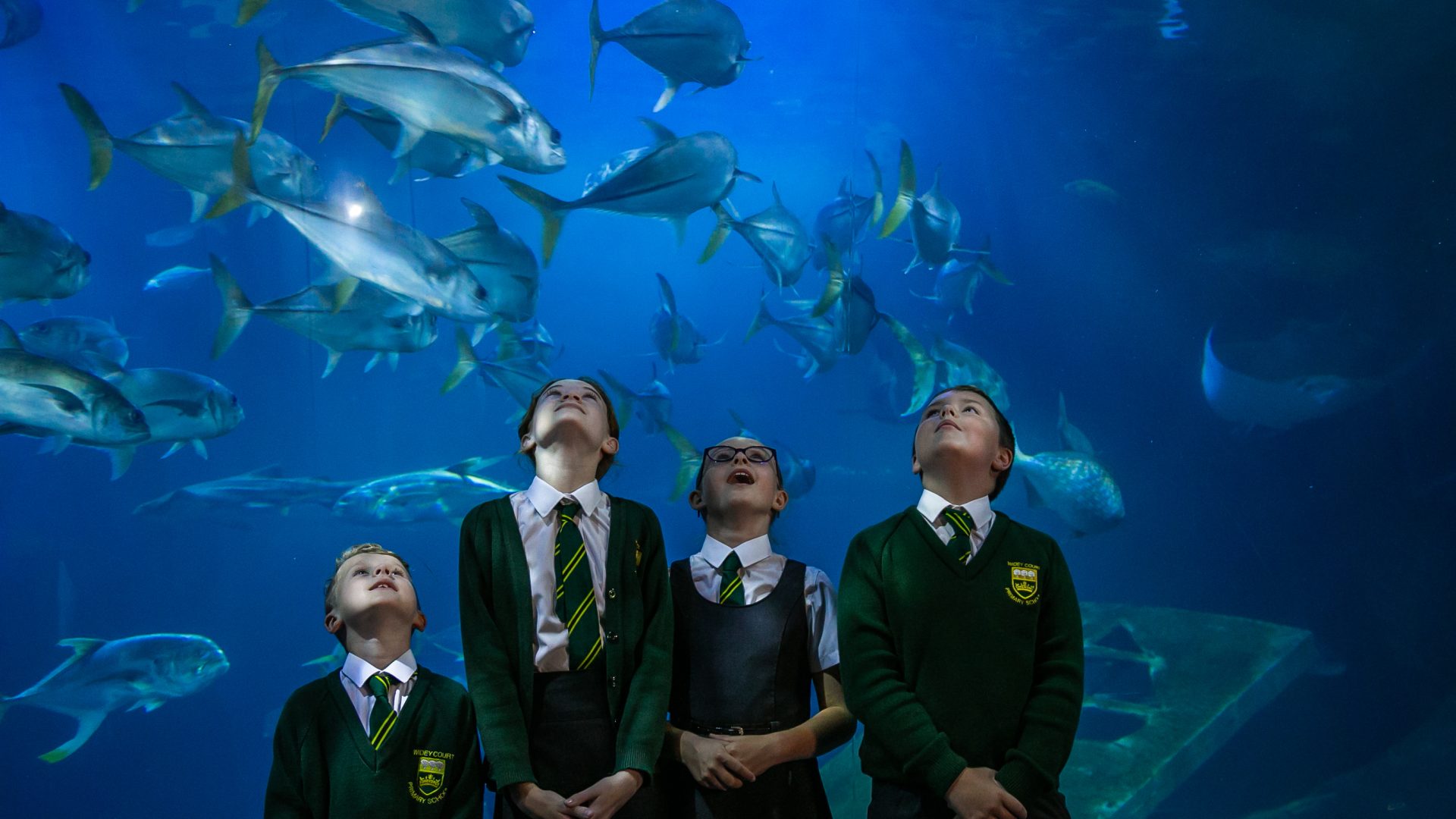
We believe everyone has the right to access high quality Ocean education.
The Ocean has a wide-ranging and powerful impact on young people’s well-being, their understanding of the world and formation of aspirations. The Ocean belongs in the classroom.
Our award-winning Learning Team engages over 25,000 learners onsite at the National Marine Aquarium every year, as well as thousands more virtually across the globe. We are also involved in Continued Professional Development for educators and trainee teachers alike, providing the knowledge and the motivation to bring the Ocean into the classroom.
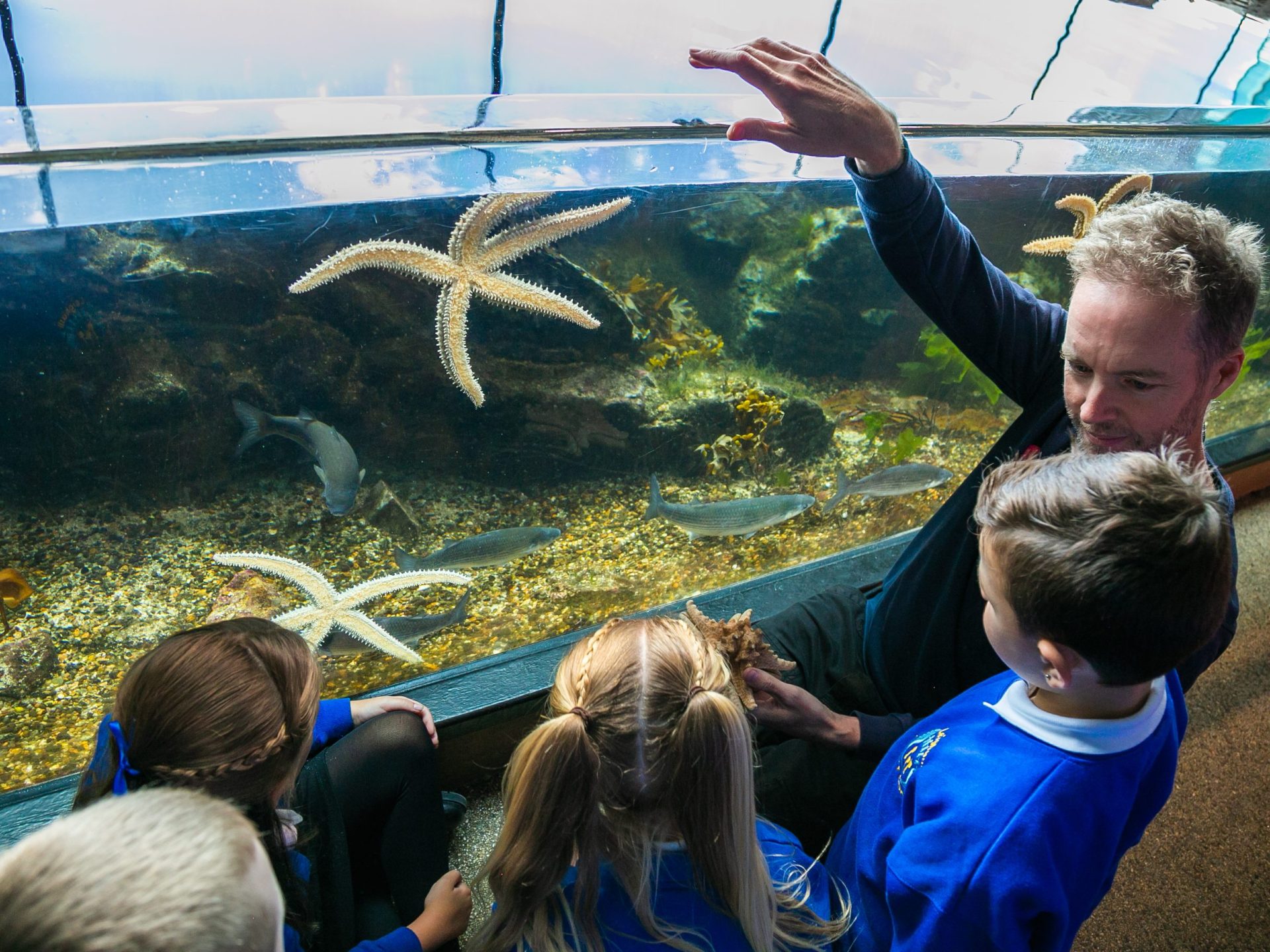
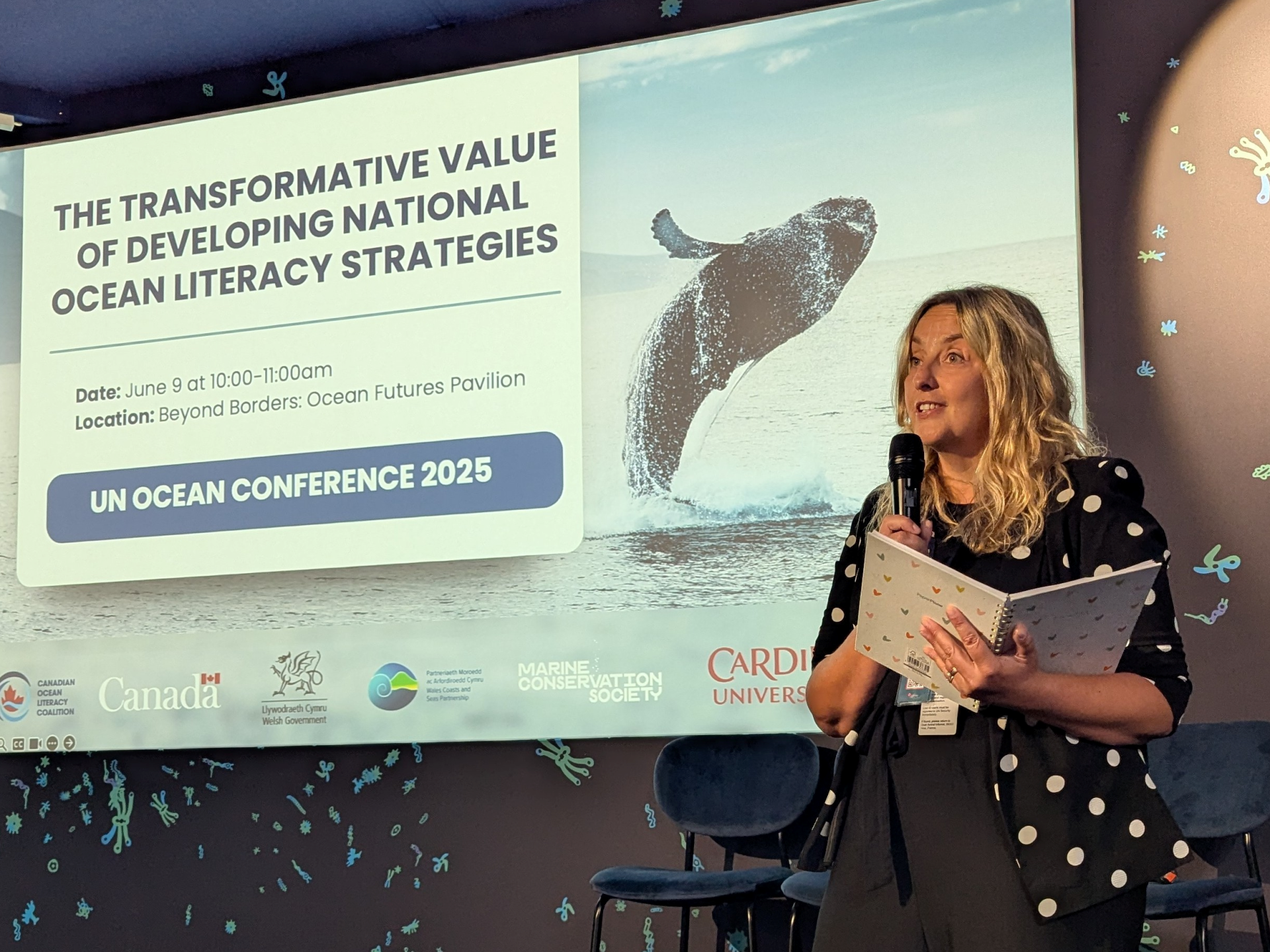
Despite the Ocean being intrinsic to planetary and human health, it hardly features in the England National Curriculum for Primary or Secondary schools. This year, the Labour Government pledged to reform the curriculum to meet today’s needs, something which happens every 7-10 years, and hasn’t been undertaken since 2014. The OCT saw this as an opportunity to achieve one of our key conservation goals: to work with government to include ocean topics in the national curriculum.
Part of the process to change and review the curriculum involves the government listening to interested organisations and individuals for their thoughts, ideas and points of view on proposed changes. We know that in order to get Ocean topics embedded in the curriculum, we need to engage in those spaces. So we did this in two ways, our education team members, Stu and Becky attended an engagement day hosted by the department for education which gave them a chance to find out more about the consultation, share our learnings from engaging with the many students and teachers that participate in our workshops, and suggest that Ocean could be integrated into the curriculum.
In November 2024, came the slightly longer task, the Department for Education put out a “call for evidence” which asked 44 questions for response. We wrote a submission sharing our expertise and sent it off, this was then reviewed alongside all other submissions, and the Department produced a report, that was launched at the beginning of November 2025.
This report outlines the plans and key takeaways for the new curriculum. The updates and changes will be written with a phased approach over the next 7 years.
These changes are not vast and do not explicitly include the addition of blue spaces, however, we are happy to see the recommendation to add climate sustainability. With the Ocean and the climate inextricably linked, we will continue to advocate and advise that the Ocean is the forefront of this conversation. We also welcome the introduction of “essential citizenship” and see clear ways that Marine Citizenship can be incorporated into this topic.
So, what’s next?
Our position as winners of “The Best Education Team” at the recent School Travel Awards highlights the value of Ocean education and cements our position as industry leaders within this field. We will continue working with thousands of learners and their educators across the country and beyond, building an Ocean-literate generation of young people who understand their connection to the Ocean, benefit from connecting with it and feel empowered to protect it.
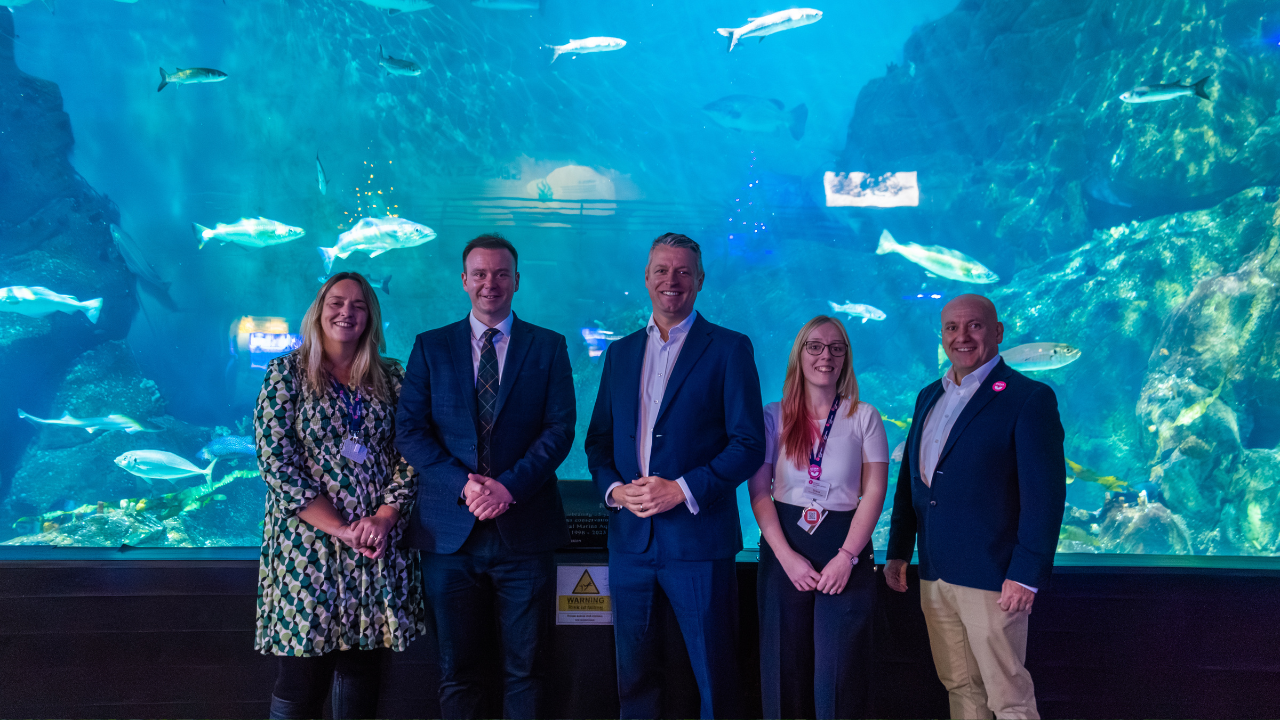
The OCT will also continue providing input to further discussions and give the Ocean a voice in this space. We have been working with our local MPs Luke Pollard and Fred Thomas to share our thoughts and findings and will continue to update them with our Ocean education successes.
We know the importance of this task and are asking for your support. The Motion for the Ocean is a powerful tool that helps put Ocean recovery at the heart of council decision-making. As well as supporting healthier communities, stronger local economies, and thriving marine ecosystems, a #Motion4TheOcean also puts Ocean education at the forefront of local policies.
Want to see your local council prioritise a blue curriculum? Urge them to adopt the #Motion4TheOcean and be part of a growing movement to secure a healthy and productive future for our Ocean and coastal communities.