

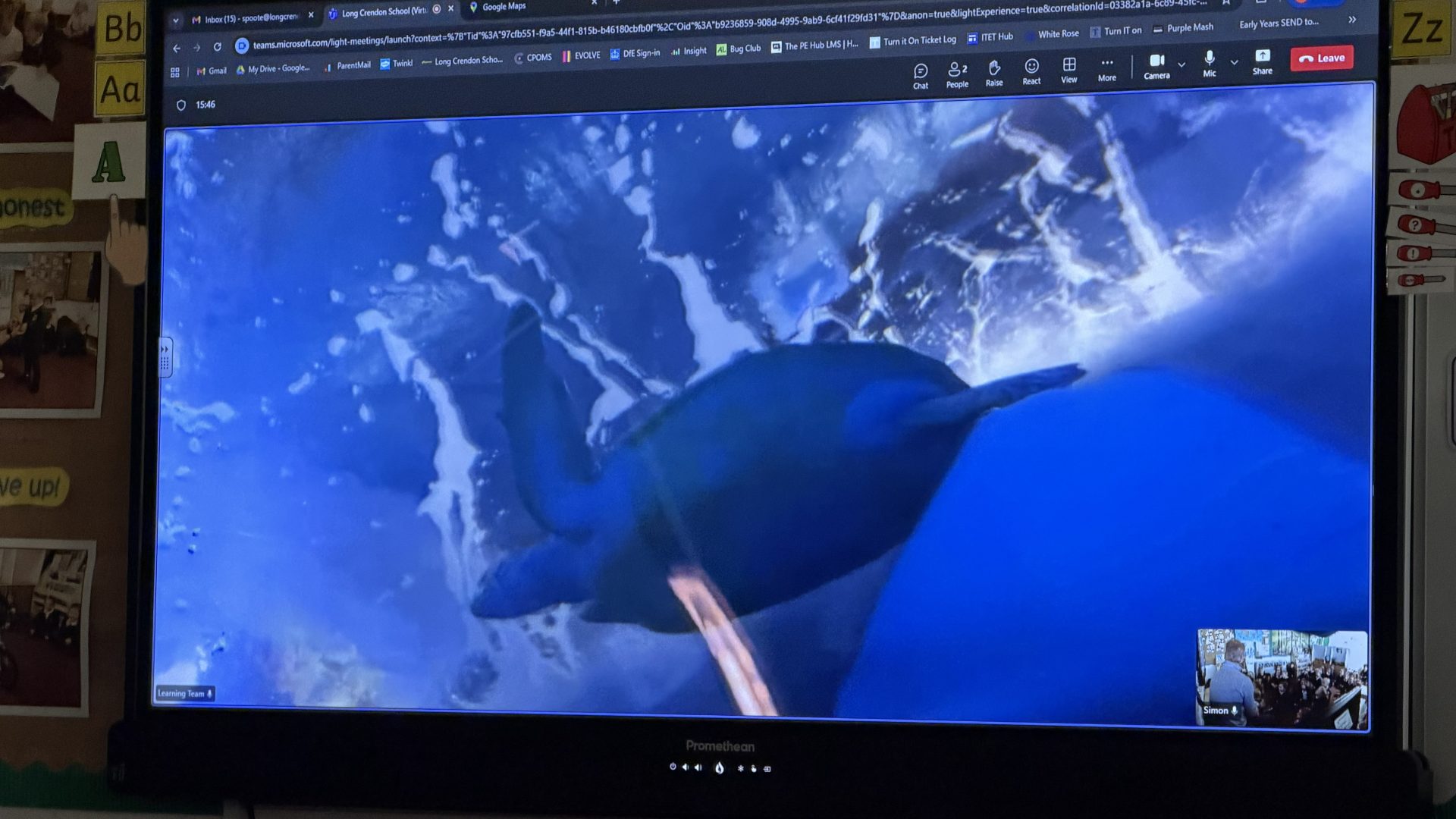
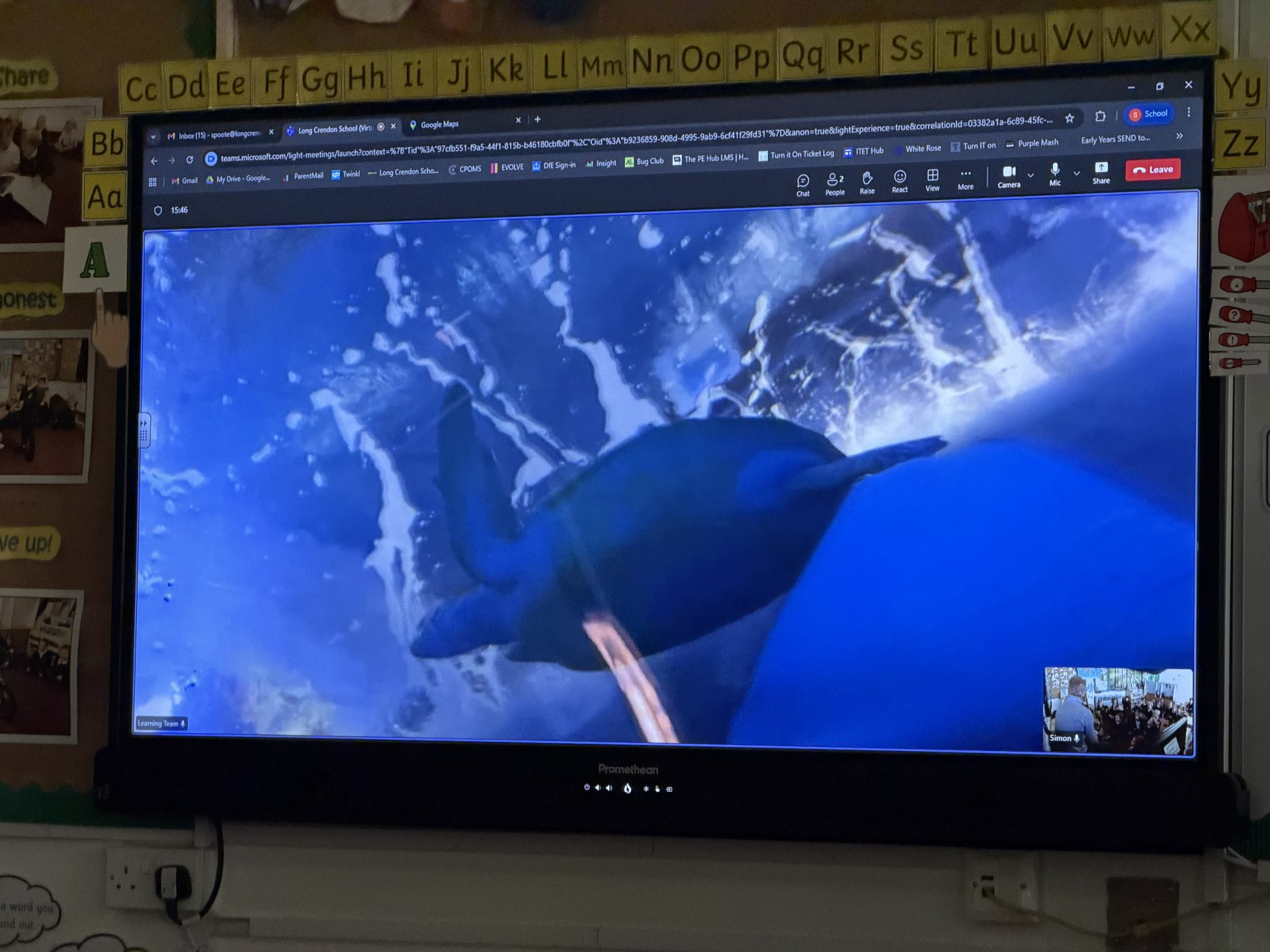
Read about how the Ocean Conservation Trust brought the Ocean to one of the most landlocked schools in the UK.
When you live in Aylesbury – one of the furthest towns in the UK from the sea – the Ocean can feel like a whole other world. In that thoroughly landlocked town, there is no salty air, no crashing waves, no rock pools to peer into on a weekend walk. That’s exactly why it felt so special for a class at Long Crendon School to take part in one of the Ocean Conservation Trust’s Virtual Ocean Experiences.
Aylesbury is just over 65 miles from the coast (the most landlocked town in the UK is Coton in the Elms, Derbyshire, which sits roughly 70 miles from the coast). Instead of travelling miles to the coast, the class travelled there together without ever leaving their classroom.
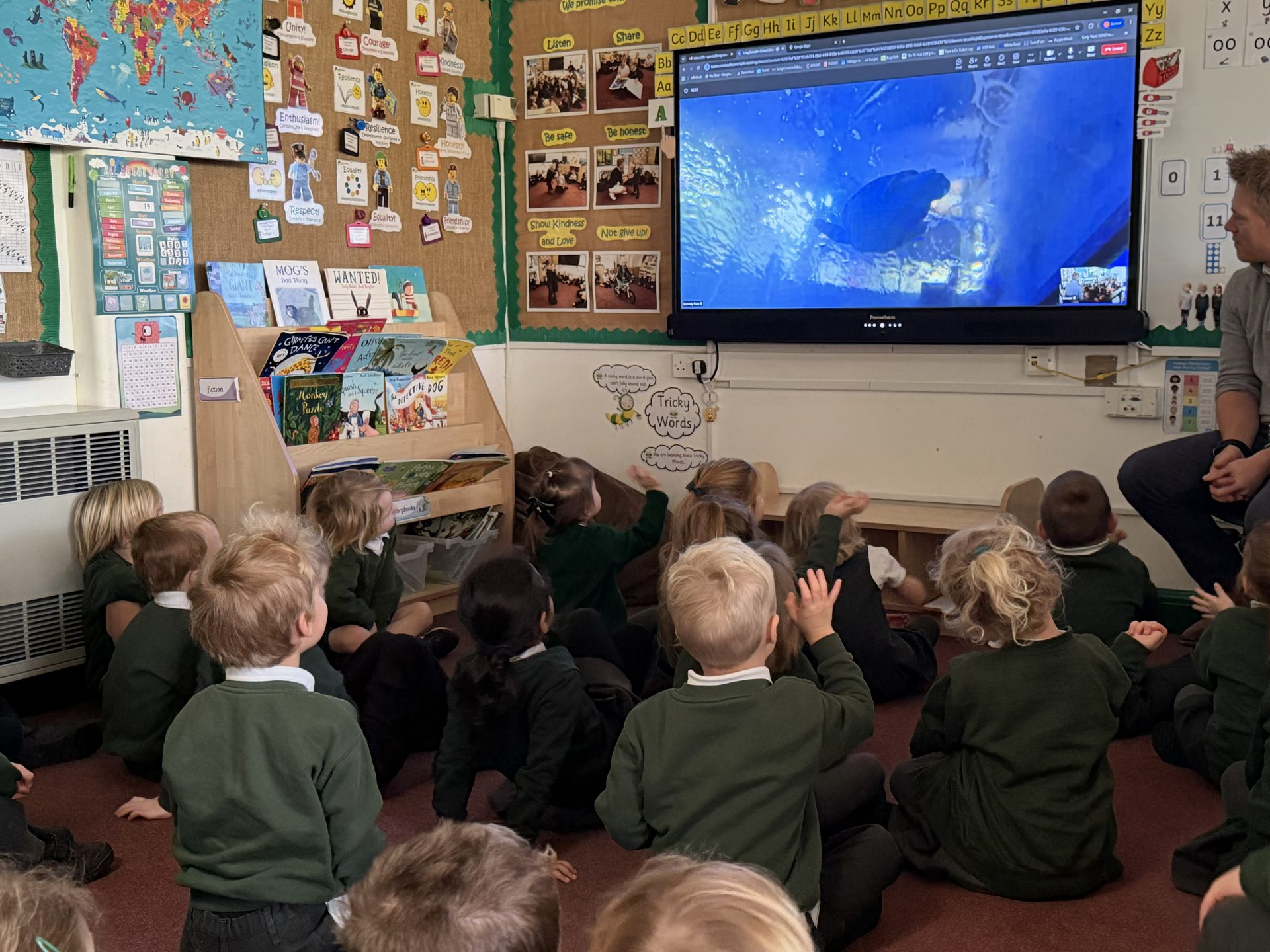
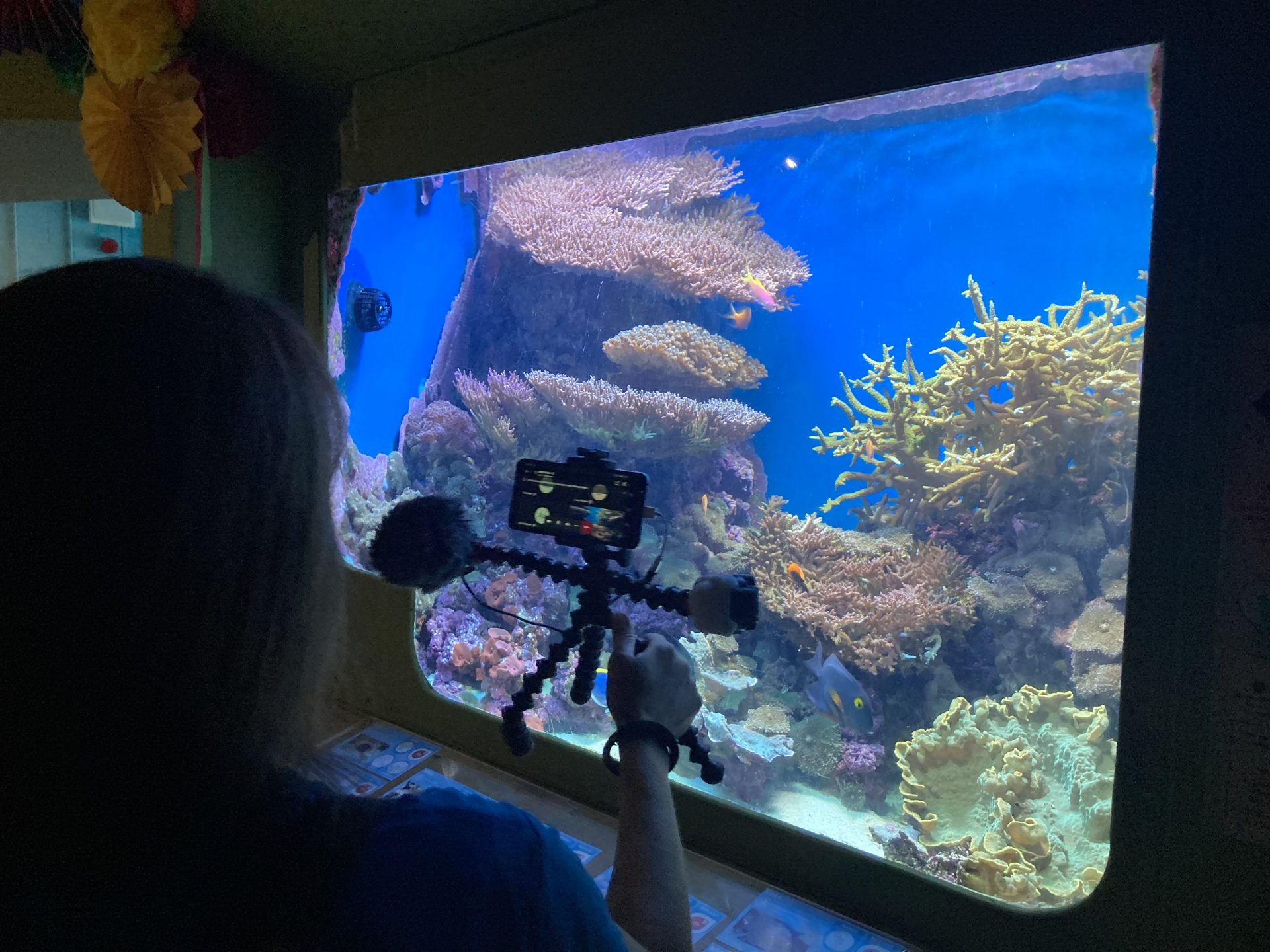
Through the Ocean Conservation Trust Education Team’s Virtual Experiences, this group of students was transported beneath the waves to explore the Ocean. They learned about marine habitats, fascinating sea creatures, and the important role the Ocean plays in our planet’s health. From colourful coral reefs to mysterious marine habitats, the experience brought the Ocean to life in a way textbooks simply can’t.
“We loved it! The children were so engaged and listened well. I was a little concerned about how well they would respond given their age, but they were mesmerised!” said Simon Poote, a foundation stage teacher at the school. “We live in one of the furthest places from the sea, so to be able to experience the wonder of the ocean in our classroom was magical.”
OCT’s Virtual Experiences began during the COVID-19 lockdowns, when aquarium visits were an impossibility. Using live-streaming technology, OCT’s Learning team provide an interactive virtual tour of the National Marine Aquarium in Plymouth. These tours were continued when lockdown ended, because the Learning team realised there are many logistical and financial barriers for schools coming to aquarium, including the cost of coach hire.
Their instinct was correct, and the numbers of participants in the virtual tours have ballooned. In the 2024/2025 academic year, over 8,800 students participated in a virtual tour, and in the current academic year over 35,000 students have taken part in some kind of virtual experience.
According to the findings of the recent Ocean and Society Survey, 85% of respondents in the UK strongly agreed that there should be more opportunity to learn about the ocean in school – however, there is very little focus on the Ocean in the national curriculum. Many children can go their entire school lives without learning about the ocean and discovering the benefits to their mental and physical wellbeing, as well as their careers.
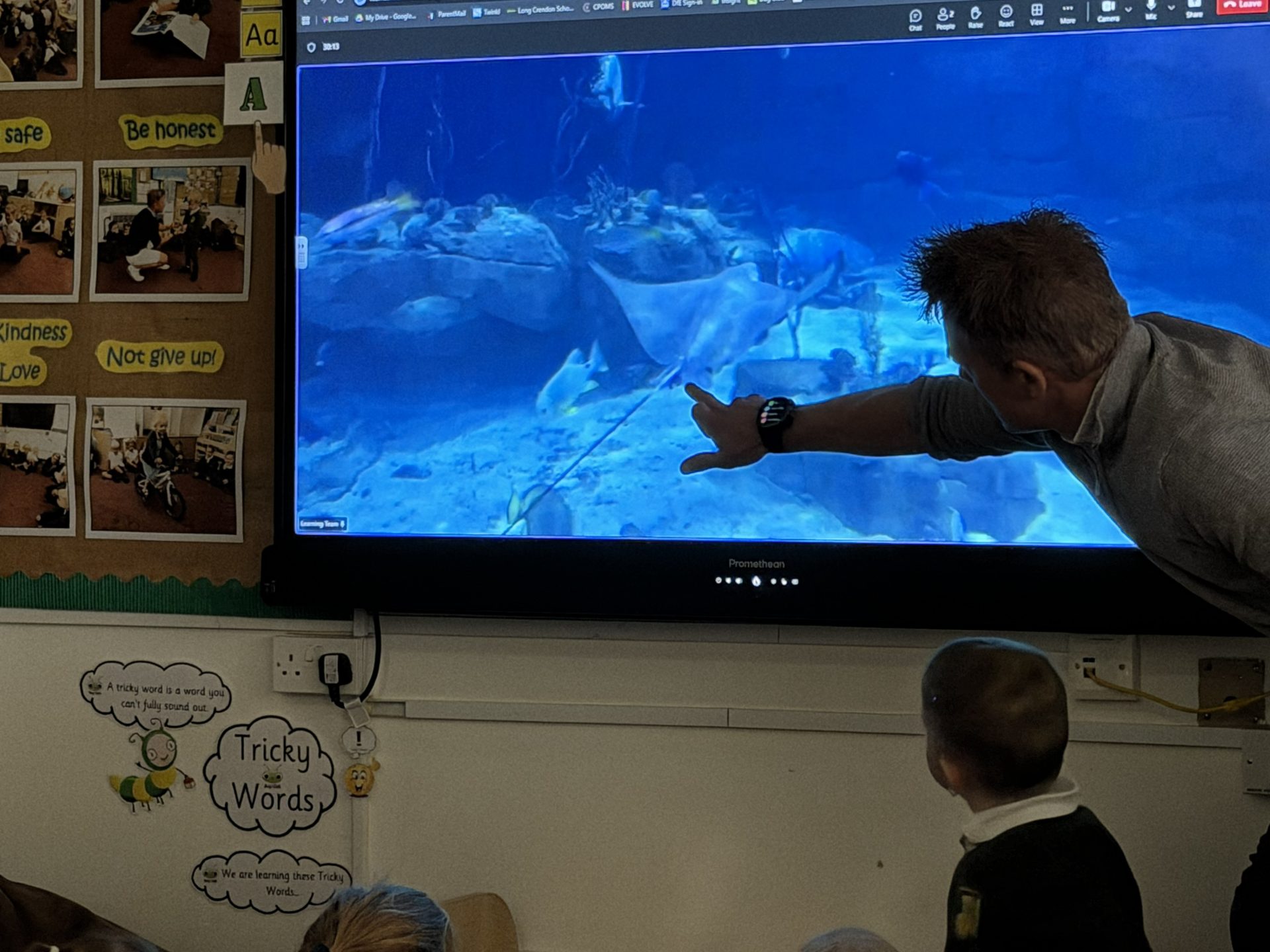
What really stood out about the Virtual Experience for the kids at Long Crendon was their enthusiasm. Questions came thick and fast – about a sharks, jellyfish, and plastic pollution. But the story didn’t end when the virtual tour finished.
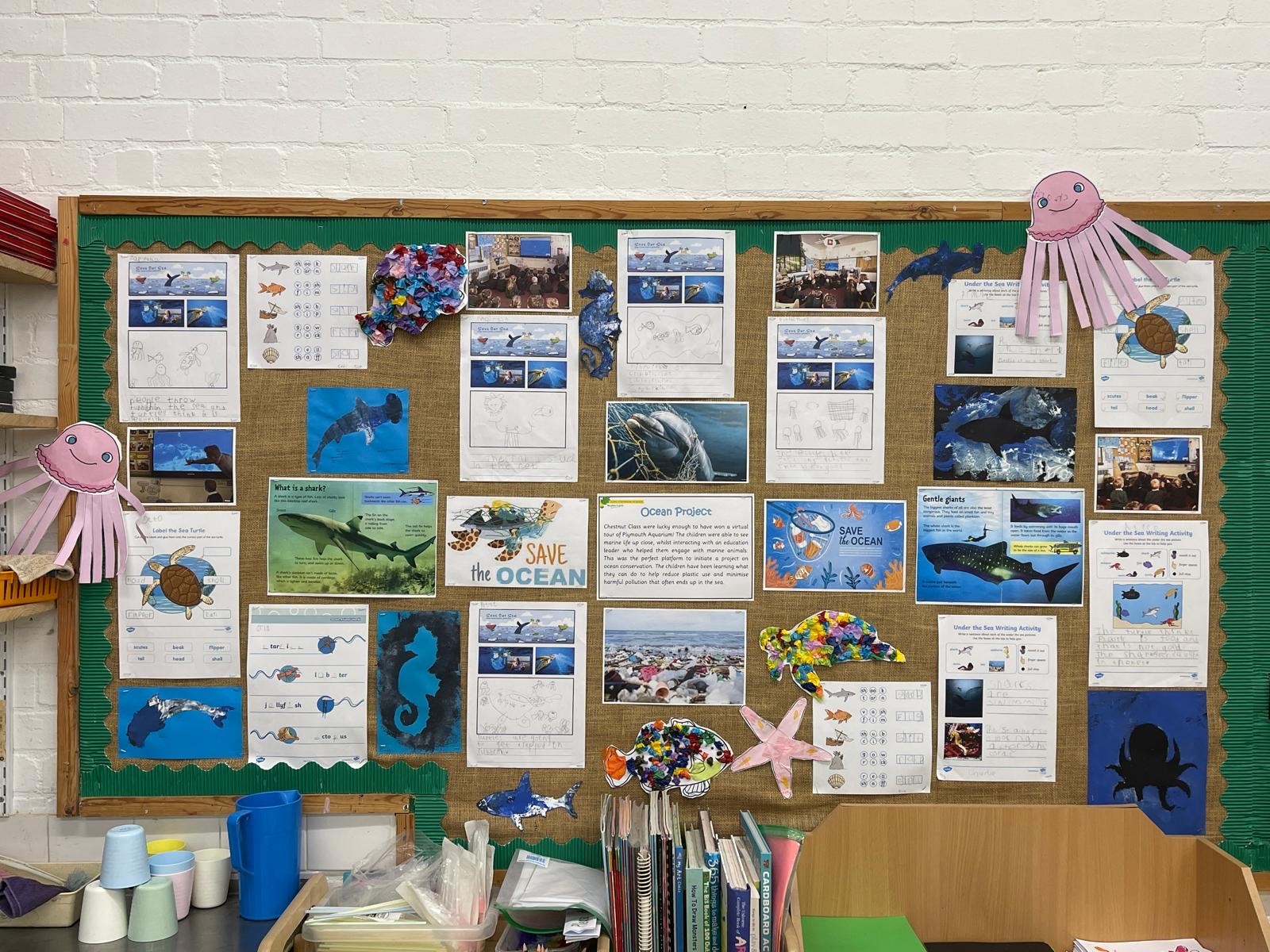
Inspired by what they had learned, the class went on to create a beautiful wall display filled with Ocean-themed artwork. The display features vibrant drawings, painted seascapes, and creative interpretations of marine life, all proudly showcasing their new knowledge and excitement. It has transformed their classroom into a mini underwater gallery – a daily reminder of their virtual journey beneath the waves. Poote said there was a huge educational value in the experience.
“The pitch was just right, with a focus on sharing facts and information that was relevant and in context to what they were seeing,” he said. “It felt interactive too, the children were given the opportunity to share what they knew as well!”
Poote and other teachers at the school noted how much the students have loved continuing to learn about the Ocean since the session. Conversations about sea life have spilled into other lessons, and the display has sparked interest from other classes passing by. For many of the students, it was their first real connection to the Ocean – and one that clearly made a lasting impression.
“It worked brilliantly as a platform to launch a project about sea conservation – the children were inspired and it made them reflect more on what we were focussing on,” said Poote.
Moments like this remind us why virtual experiences can be so powerful. Geographical limitations don’t have to limit learning. Even in the most landlocked places, young minds can still explore the wonders of our planet, develop a love for nature, and feel inspired to protect it.
If you’re interested in learning more about OCT’s Virtual Experiences, click here.
OCT offers a number of different Virtual Experience options, all aimed at different key stages. All tours are bespoke, interactive, curriculum-linked, and delivered by our experienced Schools Officers. Our team don’t just present knowledge, they engage your learners with thought-provoking questions, encourage curiosity, and provide clear answers to support and deepen learning.