

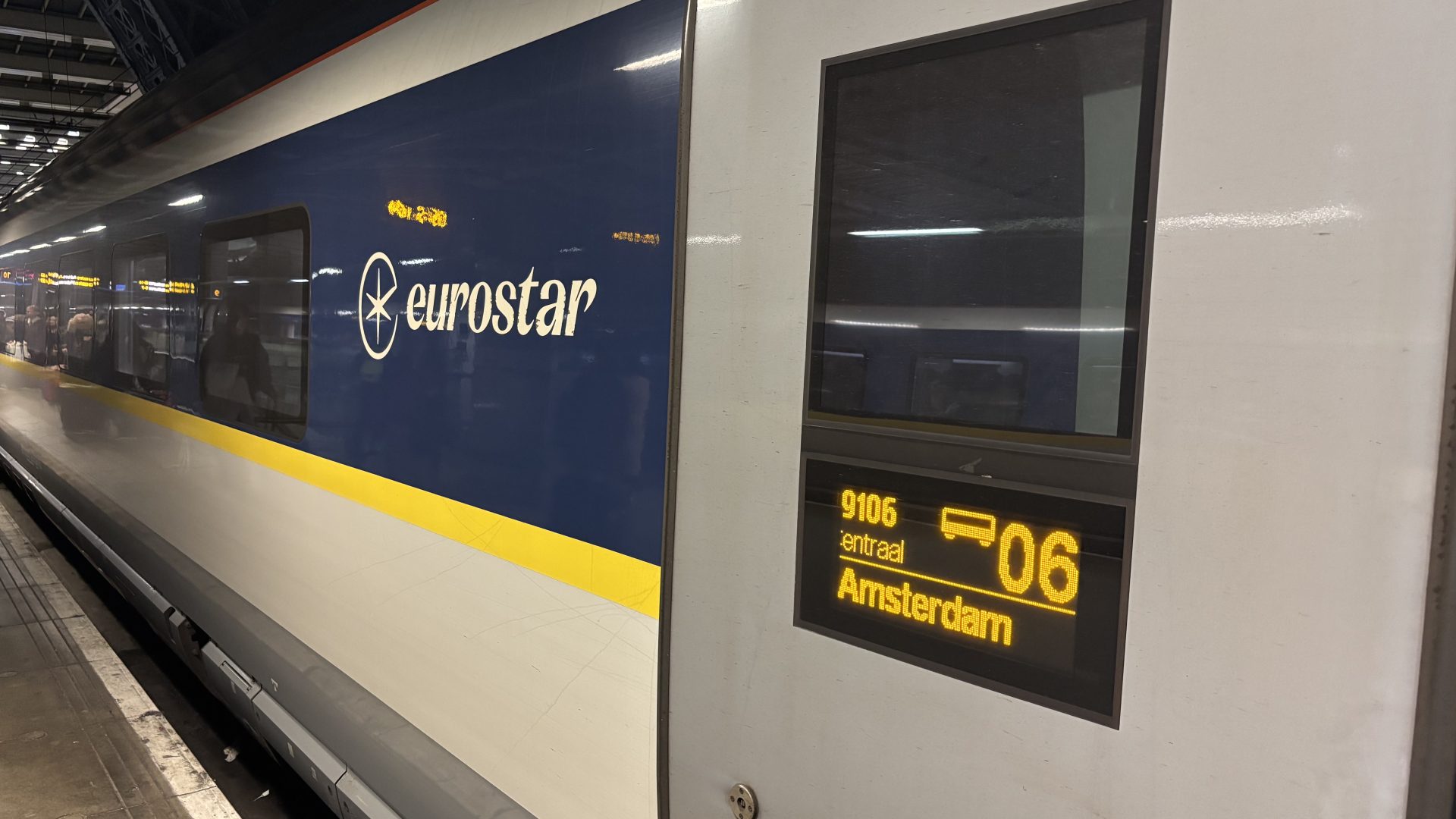

The Ocean Conservation Trust went to Brussels to represent ProBleu at the Mission Ocean and Waters Forum
A big part of the Ocean Conservation Trust’s mission is to help shape future generations of sea stewards and to instil Ocean literacy in today’s youth. That’s why, earlier this month, OCT’s Schools Engagement Manager Stu Higgs took a trip to Brussels to talk to a range of stakeholders at the Mission Ocean and Waters Forum about ProBleu.
ProBleu is a European-funded education programme designed to bring Ocean and water literacy into schools. It supports teachers with resources, funding, and connections to scientists, helping to translate urgent environmental issues into engaging classroom experiences. The project’s ultimate goal is to grow the Network of European Blue Schools (NEBS).
Below is a dispatch from the conference, written by Stu, in which he shares his reflections on how conversations at forums like this can end up rippling back into classrooms, shaping the next generation of informed and motivated Ocean advocates:
On March 5th, I attended the 4th Mission Ocean and Waters Forum during the European Ocean Days event on behalf of the Ocean Conservation Trust.

This annual gathering brings together Europe’s leading voices in water and marine science, policy, education, and conservation to accelerate progress toward restoring our Ocean and waters. The event convened policymakers, scientists, NGOs, youth representatives, and civil society — all united by a shared commitment to safeguarding Europe’s blue spaces.
I was there to represent ProBleu, a Mission Ocean funded project that has, for the last three years, been supporting schools across Europe to bring the Ocean and Freshwater into their classrooms as part of a significant push to increase Ocean Literacy and engagement across the continent.
The Ocean Conservation Trust is one of five partners in the ProBleu consortium, others include Earthwatch; CSIC, The Spanish National Research Council; Innova+; Kaunas University of Technology; and Plymouth Marine Laboratories.
During its period of operation, the consortium has provided funding for over 100 schools, facilitating a wide range of student-led initiatives linked to their local environments. To qualify for the funding, the student projects must align with the requirements of the Network of European Blue Schools (NEBS), allowing automatic membership to the network upon their completion.
This year’s forum marked a pivotal moment as the Mission entered its deployment phase, showcasing innovative solutions, new digital tools such as the Digital Twin of the Ocean, and collaborative approaches to ecosystem restoration, pollution reduction, and coastal resilience.
As well as a showcasing the innovative progress to date, panellists and speakers made a point of highlighting the need, now, to scale up these developments as we enter the second half of the Mission, which is set to officially conclude in the year 2030.

It was heartening to recognise that the ProBleu consortium, along with our sister projects BlueLightS and SHORE, has already been tackling this very issue. By actively bringing schools into the NEBS we are building a strong, interlinked community of students, educators and associated professionals which transcends national boundaries — uniting people from all walks of civil society under the banner of Ocean Literacy and demonstrating the way forward in terms of restoring the health of the Ocean, seas, and inland waters through connection to the Ocean.
The ProBleu project concludes in May 2026, but the repository of digital resources compiled by the project will remain online and freely accessible for educators and organisations to use in the development of their own Mission-linked activities.
OCT are proud of Stu’s hard work on this project, which is furthering one of our core missions: to connected people to the Ocean and bring Ocean Literacy into classrooms and the world beyond. Click here to see more of what our Learning Team get up to.